
Blog
How to Accessorize an Evening Dress

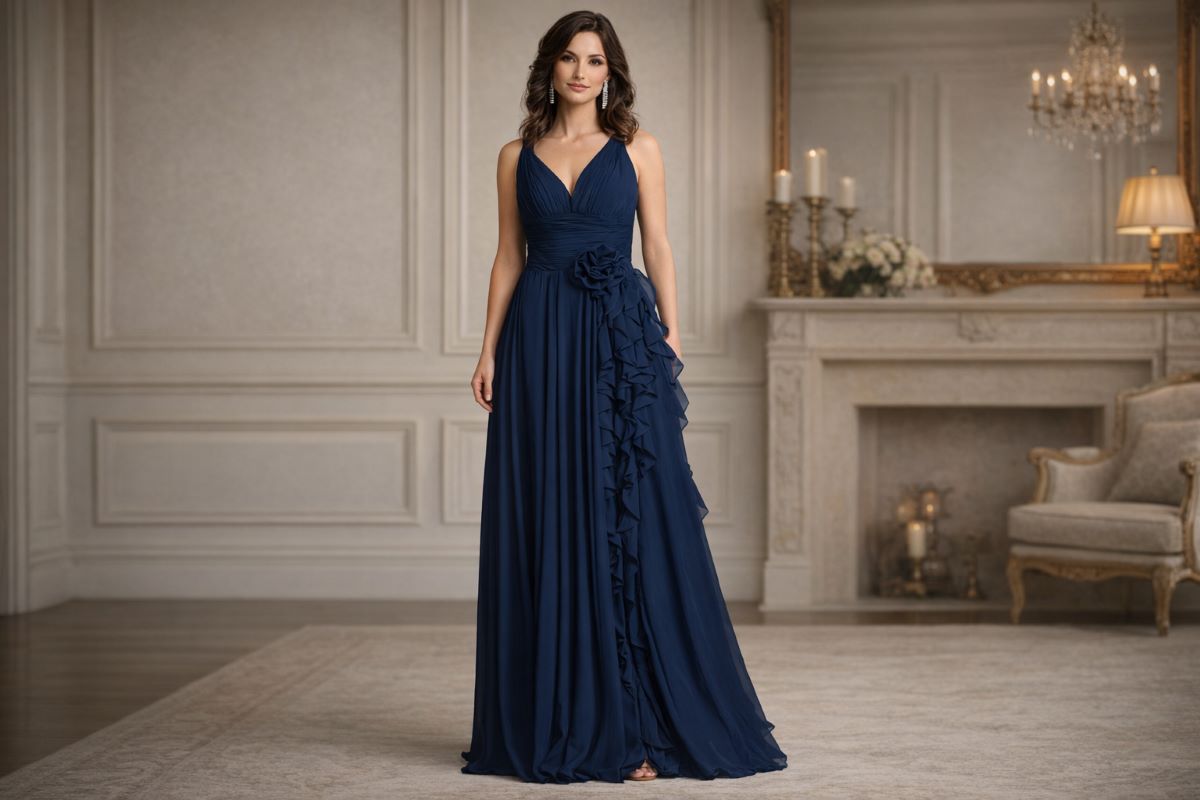
Women often search for how to accessorize an evening dress because the challenge is not finding beautiful items. It is knowing how to combine them without overwhelming the dress itself. Eveningwear relies on balance. Every accessory either supports the dress or competes with it.
Design focused brands approach this holistically. Necklines, sleeve coverage, and silhouettes are intentionally built so accessories enhance the look rather than distract from it.
Start With the Dress Before Anything Else
The first step in learning how to accessorize an evening dress is understanding the dress itself. Length, silhouette, neckline, and fabric determine what accessories should do.
With Long Evening Dresses, the visual emphasis is vertical. Accessories should never interrupt that line. Shoes usually remain subtle or hidden, which shifts attention to jewelry and upper body balance. Accessories should refine the look, not introduce contrast.
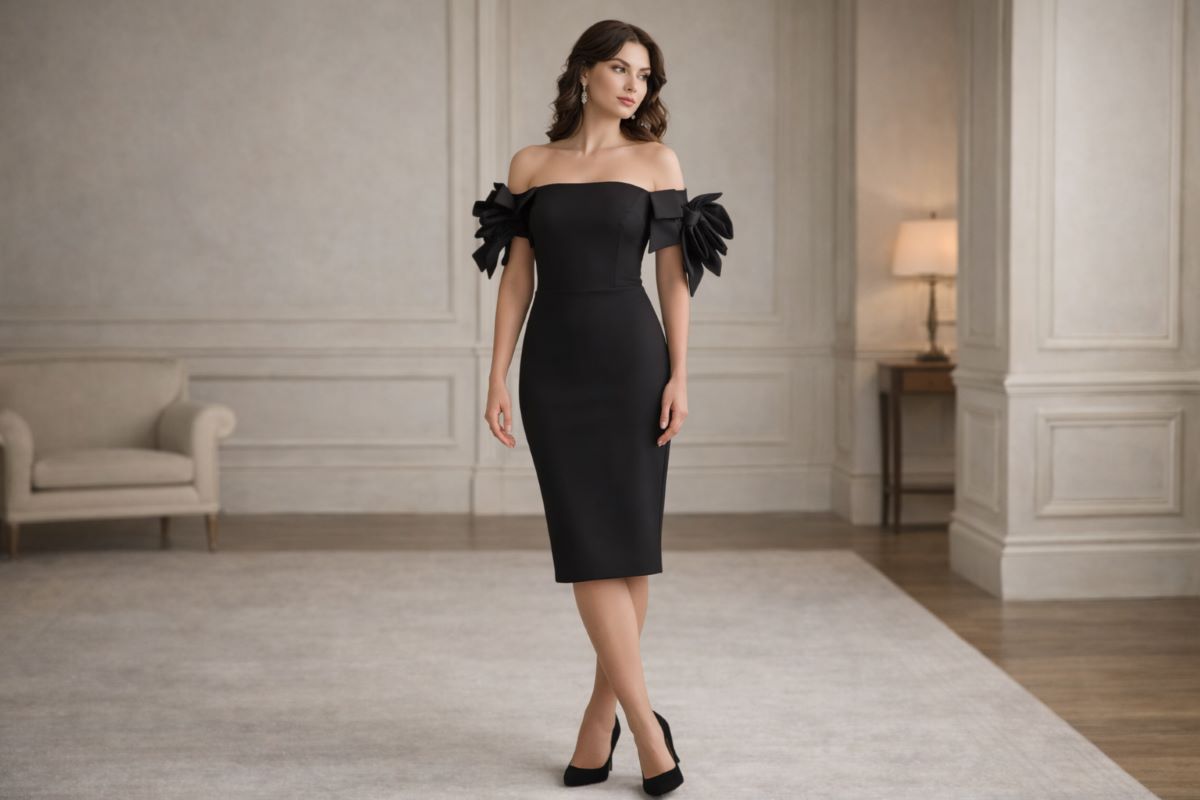
Midi Evening Gowns introduce visible footwear, which changes styling priorities. Shoes become part of the visual structure. In this case, choosing elegant shapes and controlled finishes ensures the look stays cohesive rather than fragmented.
For Short Formal Dresses, accessories play a more active role. Because the leg line is exposed, shoes, proportions, and visual balance become more noticeable. Over styling is the most common mistake here. Simplicity preserves elegance.
Match Accessories to the Formality Level
A complete evening look requires consistency. Mixing formal and casual elements weakens the visual message. Highly structured dresses demand equally refined accessories. Soft or casual materials can undermine the formality, even if they are fashionable on their own.
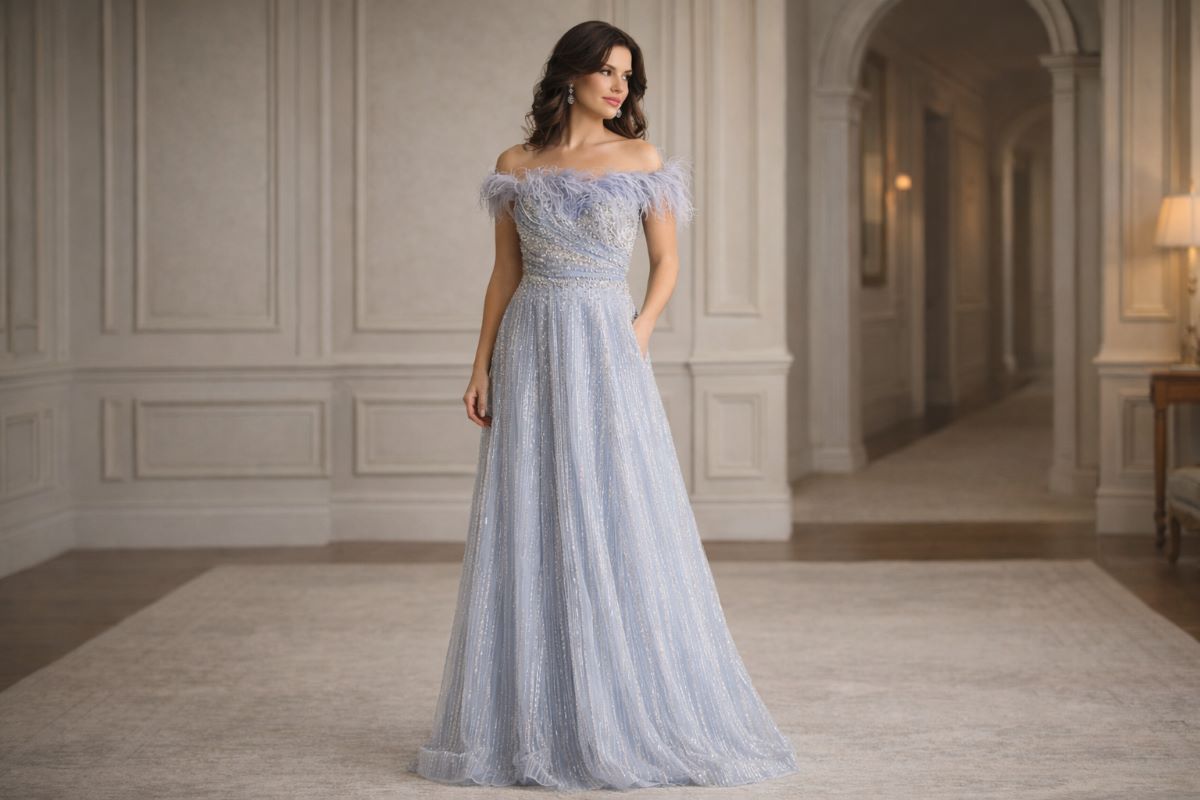
This rule becomes critical with Evening Ball Gowns. These silhouettes already provide volume, movement, and drama. Accessories should reduce noise, not add to it. Minimal jewelry, polished footwear, and clean shapes allow the gown to remain dominant.
Jewelry Should Follow the Neckline, Not Fight It
One of the most searched aspects of how to accessorize an evening dress is jewelry selection. The neckline should always guide this choice.
Open necklines allow for statement pieces, but that does not mean excess. Jewelry should frame the neckline, not overpower it. High necklines or structured bodices benefit from restraint. Earrings and bracelets often work better than necklaces in these cases.
Asymmetrical designs require careful balance. Jewelry should stabilize the composition, especially when styling elegant evening gowns that rely on clean architectural lines rather than heavy embellishment.
Sleeve Coverage Changes the Styling Strategy
Sleeves influence how much structure the dress already provides. Dresses with full sleeves or partial coverage frame the upper body visually. Adding heavy jewelry can clutter the look. This is why styling dresses with refined sleeve coverage styles works best when accessories are minimal and controlled.
Hair styling matters here as well. Pulled back or softly structured hair complements covered designs, keeping attention on proportion rather than excess detail.
Proportion Matters for Every Body Type
Accessories must scale correctly with both the dress and the wearer. With Plus Size Evening Dresses, balance is essential. Accessories that are too delicate disappear visually, while oversized elements can overwhelm. The goal is visual harmony.
Footwear should feel grounded. A stable heel supports the silhouette and keeps the look cohesive from top to bottom.
Shoes Are the Foundation of the Look
Shoes anchor the entire outfit, even when they are not the focal point. For longer silhouettes, shoes should blend into the overall look. Neutral tones, metallics, or colors close to the dress preserve the vertical line.
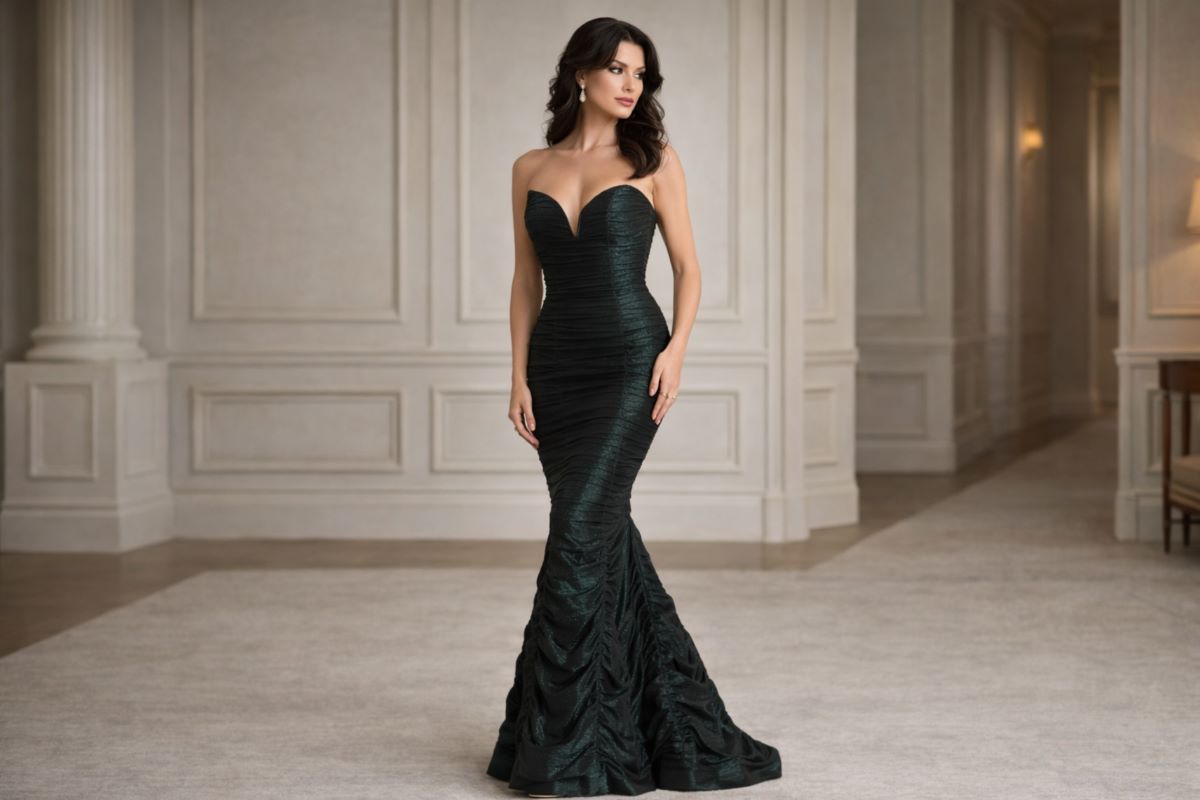
For mid length and shorter designs, shoes gain visibility. Shape becomes more important than decoration. Clean lines keep the look elevated. This is especially important when styling fitted straight evening silhouettes, where precision and simplicity define the aesthetic. Overly ornate shoes disrupt the design language of the dress.
Fabric and Texture Must Work Together
Another key aspect of how to accessorize an evening dress is texture coordination. If the dress is heavily embellished, accessories should be smooth and understated. If the dress relies on clean fabric and structure, accessories can introduce subtle interest, but never excess. Consistency in texture creates a refined result. Inconsistency creates visual noise.
Color Should Support the Dress, Not Compete
Accessories should never fight the dress for attention. Neutral metallics remain popular because they adapt without distraction. When color is introduced, it should echo the dress subtly rather than dominate the look.
Color contrast should feel intentional and restrained. If the eye does not know where to rest, the look feels incomplete.
Build the Look as a Single Concept
The most successful evening looks are built as one idea, not assembled piece by piece. Hair, makeup, jewelry, shoes, and dress should all support the same visual goal. This is the difference between wearing a dress and presenting a complete evening appearance.
Understanding how to accessorize an evening dress means recognizing that every element has a role. Nothing should feel accidental.
Design driven brands approach eveningwear this way by default. Dresses are created with styling versatility in mind so they work across silhouettes, lengths, and coverage preferences without losing balance.