
Blog
Luxury Prom Dresses Over 1000 Dollars


By Nazy Rafaeil, Brand Strategist & Julie DuRocher, Chief Designer
Finding a luxury prom dress is not like regular prom shopping. Most teens begin the search with an idea of what they want, but once the price moves beyond one thousand dollars, something shifts. Shoppers slow down. They stop rushing from rack to rack and start investigating each dress carefully, examining it from every angle before even trying it on. Parents get more involved at this price point, commenting on fit and construction rather than just color or style.
The focus moves from quantity to quality. Instead of pulling ten dresses into the fitting room, luxury shoppers narrow it down to three or four standouts. And once the dress is on, they don’t just glance in the mirror and move on. They feel how the fabric sits against their skin—is it smooth or stiff, light or heavy? They test whether the bodice holds its shape without constant pulling or adjusting. They run their fingers along the beading. At this level, how the dress feels matters as much as how it looks.
When people first look into expensive prom dresses, many start by comparing different silhouettes. Some love the dramatic sweep of Ball Gowns Prom Dresses, while others are drawn to the softer elegance of A-Line. Fitted styles like Mermaid Prom Dresses attract shoppers who want a defined shape, and modern teens often look at trend-forward designs similar to Two Piece Prom Dresses. Even within more traditional Long Prom Dresses, you will find different moods depending on fabric and detailing. Size-inclusive options like Plus Size Prom Dresses also appear in luxury collections, offering the same level of craftsmanship and beauty.
Expensive prom gowns feel different right away. The materials look richer, the lining feels smoother, and the structure is more supportive. This is where Couture Dresses come in for many shoppers who want something unforgettable and deeply personal.
What Makes a Prom Dress “Luxury” and Expensive
A true luxury dress is defined by craftsmanship. When you hold one of these gowns, the weight feels balanced. The design has intention. The inside of the dress looks almost as polished as the outside.
At this price point, built-in support means precise boning through the bodice and built-in cups where the measurements align with the dress size—not generic padding. Cheaper prom dresses made by mass production companies often have no internal structure at all. The corset top is just fabric, and the only “support” comes from how tight the dress is, not from actual construction.
Luxury gowns are fully lined beneath the main fabric. When you flip the dress inside out, you should see clean seam finishing with no exposed threads or scratchy edges. This is one of the easiest ways to spot quality—if the inside looks rushed, the outside will eventually show it too.
Beading is where the difference becomes obvious. Jovani hand-sews every bead onto luxury gowns rather than gluing them, and the beadwork is applied after the structure is built. We don’t use plastic beads or flat sequins with no dimension. The placement is carefully mapped so beadings won’t crackle over time and the fabric won’t pucker around them. This level of detail is what separates a dress that photographs beautifully once from one that holds up through an entire night of dancing.
“I had an amazing experience working with Jovani. We worked with Matt and he provided nothing short of an amazing experience! He is the kindest soul and made sure we felt empowered and beautiful. The gowns are high quality and up to date with the latest trends, absolutely stunning and perfect for any black tie, prom, or formal event!”
— Verified Jovani Customer
Choosing the Right Fabric
Fabric is often what separates a premium gown from an average one—and the differences are more specific than most shoppers realize.
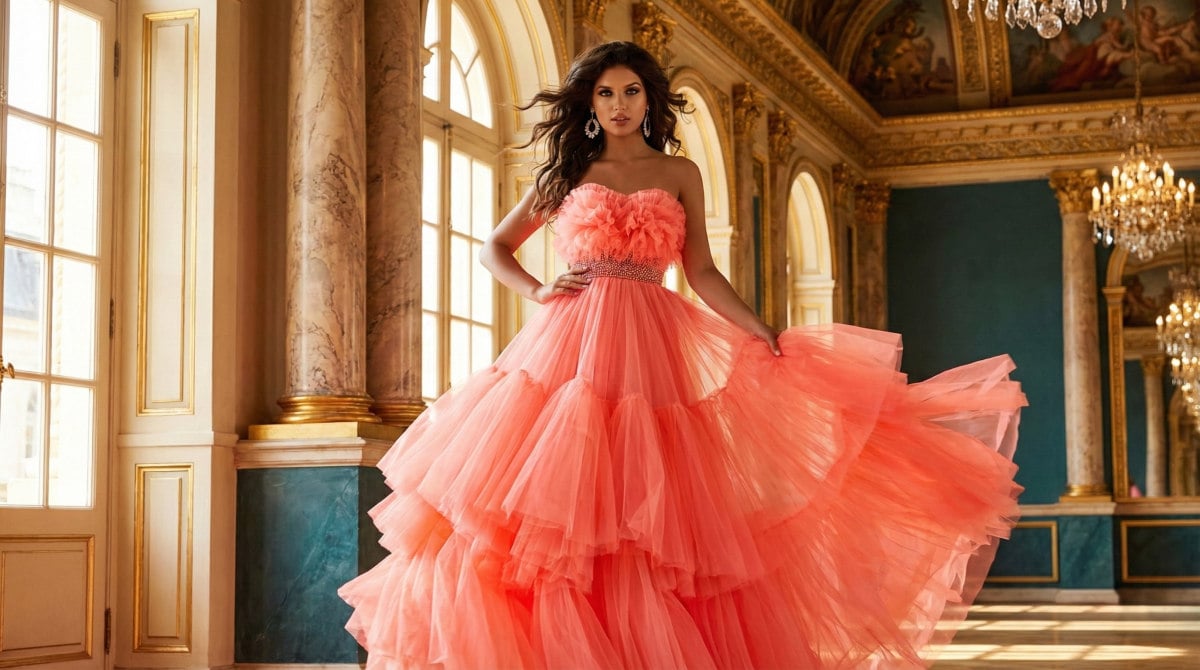
Luxury dresses use materials like Italian mikado, French tulle, and French lace. These fabrics cost more because they drape better, hold their shape longer, and feel smoother against skin. Budget dresses often substitute generic satin that looks shiny but cheap, or tulle that feels scratchy and stiff. French lace in particular signals a higher-end gown—you’ll rarely find it in mass-produced dresses.
But expensive fabric alone doesn’t guarantee the dress works for you. Your body and your history with formal wear matter. If you’ve worn fitted dresses before, you know how certain fabrics feel on your shape. Some teens avoid jersey because it clings, but in the hands of a skilled designer, jersey can actually flatter curves beautifully—the key is how the dress is constructed and where seams and details are placed to smooth rather than expose.
When you try on a dress, test the fabric honestly. Touch it—does it feel substantial or thin and flimsy? Are threads already pulling anywhere? Put it on and check the mirror from behind. Does the fabric show your undergarments? Can you see the line of your underwear through the skirt? Does it cling in places you don’t want? Move around—walk, sit, turn. Cheap fabric reveals itself quickly once it’s on a real body in motion.
The better the fabric, the better the dress will photograph, move, and hold up through a six-hour prom night.
Fit and Silhouette: How to Narrow Your Choices
Your silhouette shapes the entire look, but choosing the right one takes more than scrolling Instagram or TikTok. The most common mistake we see is teens falling in love with a dress on screen without considering how it will work with their body. A style that looks stunning on a model may fit completely differently on someone with a fuller bust, a longer torso, or a bit of belly they’d rather not emphasize.
Silhouette choice is personal. Empire waist styles sit higher and skim over the midsection, which works well for girls who want coverage without feeling constricted. Mermaid prom dresses hug every curve from bust to knee, so they’re beautiful on someone who wants that sculpted look—but unforgiving if you’re not comfortable with body-hugging fit. A-line falls somewhere in between, flattering most body types without clinging or overwhelming.
At Jovani, Julie designs each dress and then fits it on real models before production—both standard and plus sizes. She watches them walk, checks how the hem falls on tall and petite frames, and examines how the cups sit on different bust sizes. The dress then goes to our sales team and CEO, who has 40 years of experience in design and fit, for final review. A dress doesn’t go into production until it works on real bodies, not just a sketch.
When you try on a luxury gown, don’t just look in the mirror and decide. Walk across the room. Sit down for a minute. Bend over slightly. Raise your arms. Check how the cups feel—do they gap or dig in? Look at the dress inside and out. Take videos from multiple angles and share them with parents or friends before making a decision. If you’re torn between silhouettes, try similar styles back to back so you can feel the difference rather than guess.
The right luxury gown should feel secure the moment you zip it up. You should be able to move, sit, and dance without worrying about straps slipping or the bodice shifting.
Comfort Matters More Than People Expect
One of the biggest surprises for first-time luxury shoppers is how comfortable a dress should feel—and how uncomfortable a cheap one becomes over time.
We hear the same complaints about budget dresses constantly: “When I bend down my chest spills out.” “The waistline digs into my stomach when I sit.” “The beading scratches my arms.” “My straps won’t stay up.” These problems come from poor construction—bodices without proper cup structure, waistlines that rely on tightness instead of boning, beads with rough edges, straps that weren’t designed for real movement.
Think about how long you’ll actually wear this dress. From the moment you zip up after hair and makeup, to putting on jewelry and shoes, getting photos at home, riding to the venue, dancing for hours, and finally getting back, you’re looking at six hours or more in this gown. A dress that feels fine for a five-minute try-on can become unbearable by hour three.
At Jovani, comfort is built into every layer. The lining is smooth and fully attached, not tacked in a few spots. Cups are structurally sewn in, not glued inserts that shift. Details like bows and rosettes are lined underneath so nothing scratches. Even the weight of the beading is considered—heavy beadwork is distributed so it doesn’t pull or drag on one area.
Before you commit, test the small things that matter later. Does the zipper glide up smoothly or catch? Can you use the bathroom without needing two friends to help? When you move your arms, do you feel any beading edges? If a dress is beautiful but fails any of these tests, keep looking.
Choosing the Right Color and Overall Look
Teens usually shop with their eyes first—they see a dress on a model and want that exact color. But the featured shade isn’t always the right one for every shopper. That’s why Jovani now photographs many styles in multiple colors, so if a dress is shown in orange but also comes in green or blue, you can see how each option actually looks on a body rather than guessing from a swatch.
Color behaves differently across fabrics. The same “green” looks completely different in sequin versus satin versus chiffon. And green alone has dozens of shades—emerald, lime, sage, forest, mint. The same applies to blue, pink, and every other color family. If you’re shopping online or ordering a dress you haven’t seen in person, ask for the exact shade name or request a fabric swatch. The color on your screen won’t match perfectly.
Skin tone matters more than most teens realize when they start shopping. Some people know immediately which colors they dislike, but many haven’t tested how different shades look against their skin under various lighting. What looks stunning in a fitting room mirror may wash you out in photos. When possible, try a few unexpected colors alongside your first choice—you might be surprised.
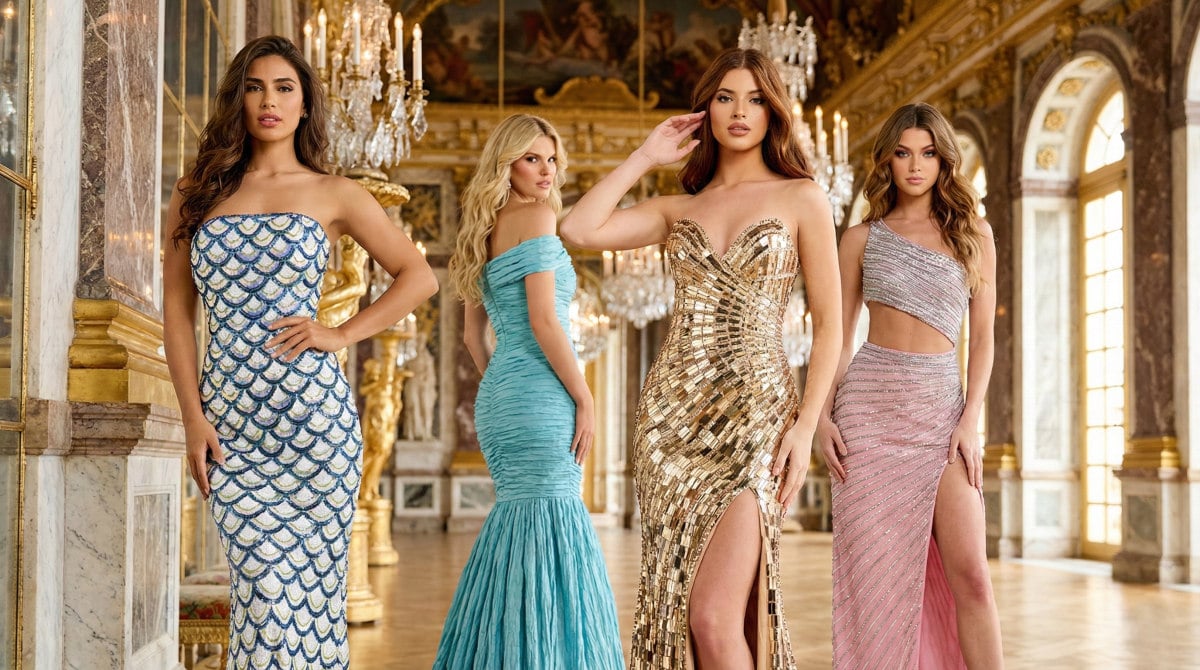
This year Jovani introduced shades beyond the typical fuchsia, emerald, and royal blue. We’re seeing interest in bronze, burnt orange, nude tones, and aqua alongside classic navy. But trends shift quickly, and what ends up being the standout color of prom season depends on what shoppers actually choose. We’ll know more once peak season hits.
One thing that matters more than venue or theme: school dress code. Before falling in love with any color, confirm it meets your school’s requirements. After that, prioritize fit for your body type, how the shade looks against your skin, and whether the color feels like you—not just what’s trending.
Why Luxury Prom Dresses Over 1000 Dollars Are Worth It
The real value of a luxury gown shows up in ways budget dresses can’t match.
First, the fit. As one pageant competitor put it: “The craftsmanship is evident the moment you put a gown on—they photograph beautifully and move flawlessly.” Another customer told us her Jovani dresses “fit like a glove and needed minimal alterations.” When construction is done right, you spend less on tailoring and more time enjoying the dress.
Second, the longevity. A well-made gown doesn’t retire after one night. Luxury dresses hold their shape and quality through multiple wears—prom, pageants, formal events, even a sister’s graduation years later. One dress becomes several occasions. That’s not an expense, it’s an investment you can pass down.
Third, how it makes you feel. We hear this constantly: “You feel like a million dollars whenever you are wearing a Jovani gown.” That confidence isn’t just about appearance—it comes from knowing the dress won’t fail you. No slipping straps. No scratchy beading. No bodice you’re adjusting every ten minutes. You put it on and forget about it, which lets you actually enjoy the night.
A luxury prom dress isn’t just about looking good in photos. It’s about spending six hours in a gown that doesn’t dig, slip, scratch, or fall apart—and walking away with the memory instead of the complaints.
Final Note
Take your time with this decision. Touch the fabrics. Test the fit. Try silhouettes you didn’t expect to like. A luxury prom dress should feel right the moment you zip it up—not just in the mirror, but when you walk, sit, and move.
If you have questions about construction, fabric, or fit, reach out. We’ve covered what to look for in this guide, but every body and every dress is different. When you’re ready, explore the full Jovani prom collection and see what stands out.
About the Authors
Nazy Rafaeil (Brand Strategist) researches consumer behavior and emerging trends in formal wear. Julie DuRocher (Chief Designer) oversees Jovani’s technical design, from fabric sourcing to construction standards. This guide combines their perspectives to help shoppers understand what separates true luxury from marketing.