
Blog
How Much Should You Spend on a Prom Dress

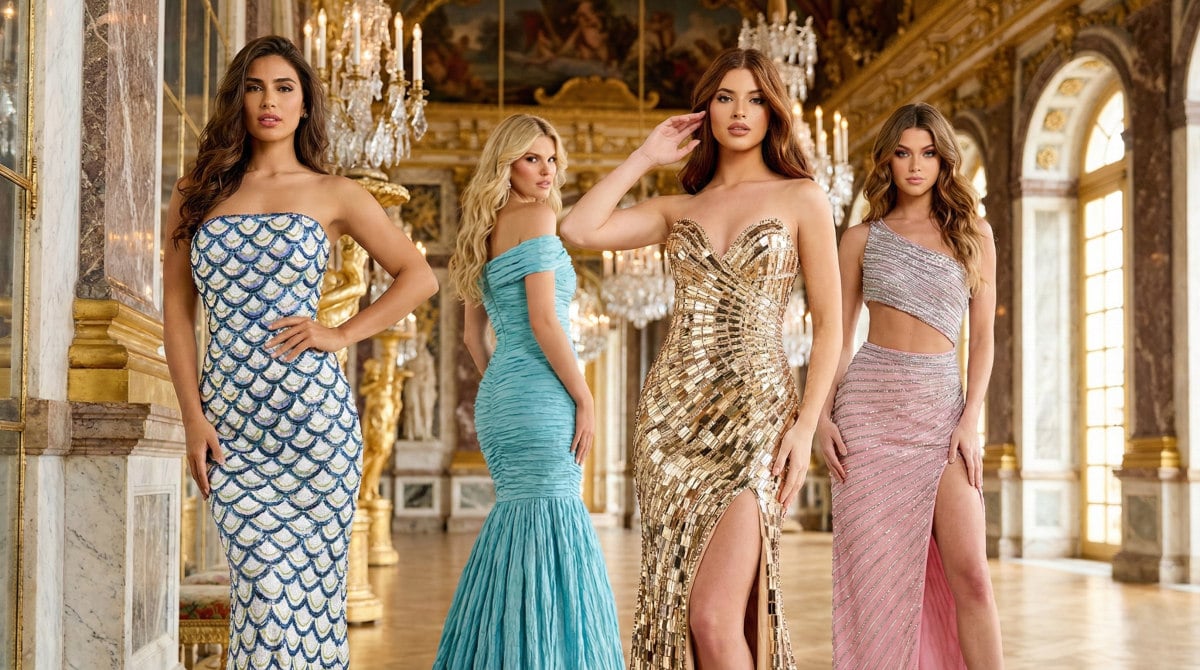
Nobody can tell you how much to spend on your prom dress. That decision depends on your savings, whether you work, what your parents are willing to contribute, and what matters most to you. But what we can do is help you understand what you’re actually paying for – so when you set your budget, you’re making an informed decision instead of guessing.
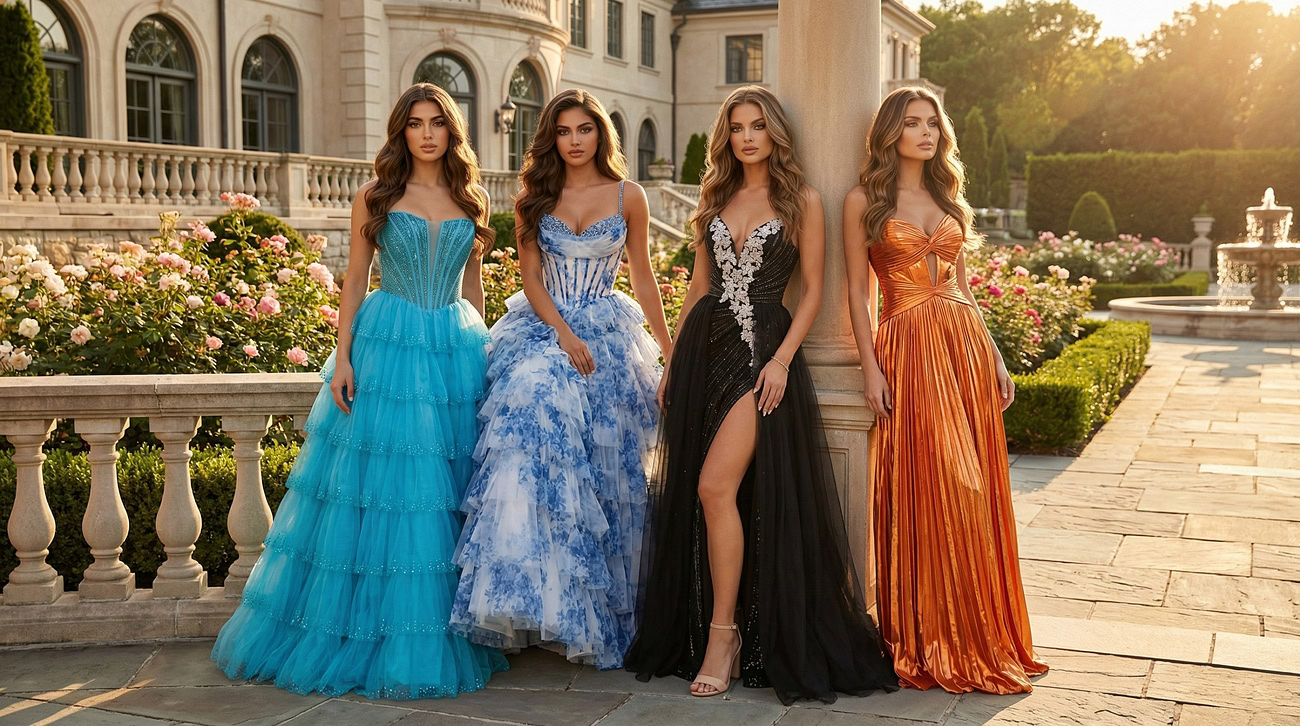
Prom is one of maybe three or four occasions in your life where you’ll wear something this special. For some girls, a $200 dress is the right choice. For others, $500 makes sense. Neither is wrong. What matters is that you understand the difference between those price points, know the hidden costs nobody warns you about, and avoid the mistakes that cost girls hundreds of dollars every prom season.
This guide breaks it all down – no sales pitch, just the truth about prom dress pricing.
What Does a Prom Dress Actually Cost?
The honest answer is anywhere from $50 to over $1,200. That range is enormous, which is exactly why so many girls feel lost when they start shopping. Here is how the market breaks down in 2026.
Under $200 is considered budget-friendly. At this price point, you will find simpler designs with basic construction. The fabrics are typically polyester blends, and embellishments like beading or sequins are usually machine-applied rather than hand-sewn. These dresses work for girls who want something presentable without a major investment, but the construction quality means they may not hold up as well through a full night of dancing, photos, and movement.
Between $200 and $400 is where most prom shoppers land. This mid-range category offers better fabric choices, more design variety, and improved construction. You start seeing details like boning in bodices, fuller linings, and more intricate embellishments. The fit tends to be more flattering because more attention goes into the pattern-making process.
From $400 to $600, you enter designer territory. This is where construction quality jumps significantly. Dresses at this level typically feature steel boning instead of plastic, hand-sewn beading, full linings rather than partial, and built-in support like cups and bust padding. The fabrics feel different against your skin – heavier satins, real silk blends, quality tulle that moves properly. These dresses are designed to photograph beautifully and feel comfortable for hours.
Above $600 to $1,200 and beyond is luxury and couture. These are statement pieces with unique designs, premium fabrics, and handwork that takes hours to complete. Many girls at this price point are looking for something nobody else will have – limited designs, custom embellishments, or signature pieces from established designers. For some families, this investment makes sense. For others, it is unnecessary.
The price you pay reflects three things: fabric quality, construction methods, and design exclusivity. A $150 dress and a $500 dress might look similar in photos, but they feel completely different when you put them on. The question is whether that difference matters to you.
The Hidden Costs Nobody Warns You About
Here is where prom budgets go sideways. Most girls focus entirely on the dress price and forget that the dress is only part of the total cost. By the time prom night arrives, many families have spent 30 to 50 percent more than they planned because they did not account for everything else.
Alterations are the biggest surprise. Almost every prom dress needs some adjustment – hemming to match your height, taking in the sides for a better fit, adjusting straps or shoulders. Basic alterations run $40 to $80. More involved work like reshaping a bodice or adjusting boning costs $100 to $150. If your dress has heavy beading or sequins, expect to pay more because the seamstress has to work around the embellishments carefully.
Here is something important about alterations: the better the original construction, the less work you need. A well-made dress with quality boning and proper fit across size ranges typically needs only minor adjustments. A cheaply made dress often needs major reconstruction to fit properly – and at that point, your alterations might cost more than the dress itself.
Shoes add $50 to $150 depending on where you shop. Many girls want heels that match their dress exactly, which limits options and often increases cost. A smarter approach is choosing a neutral metallic or a classic color that complements your dress without requiring an exact match. Department stores run sales during holiday seasons, and those deals often include formal shoes.
Accessories include jewelry, a clutch or small bag, and sometimes a wrap or cover-up. You can spend $30 or $300 depending on your choices. This is one area where you can save significantly – borrowing jewelry from your mom or grandmother, finding vintage pieces at consignment shops, or choosing one statement piece instead of multiple items.
Undergarments matter more than most girls realize. Certain dress styles require specific support – strapless bras, adhesive options, shapewear, or backless solutions. Some dresses have built-in cups and boning that eliminate this need entirely, but others require you to purchase specialty undergarments that can run $30 to $75.
Hair and makeup costs $100 to $200 if you go to a salon. Some girls do their own or have talented friends help, which saves money but requires practice runs beforehand. Nails add another $30 to $60.
Add it all up and a $300 dress easily becomes a $500 total investment. A $500 dress can push toward $750 or more. Knowing this upfront helps you allocate your budget realistically instead of being caught off guard.
The Cheap Online Trap: Why $99 Often Costs More
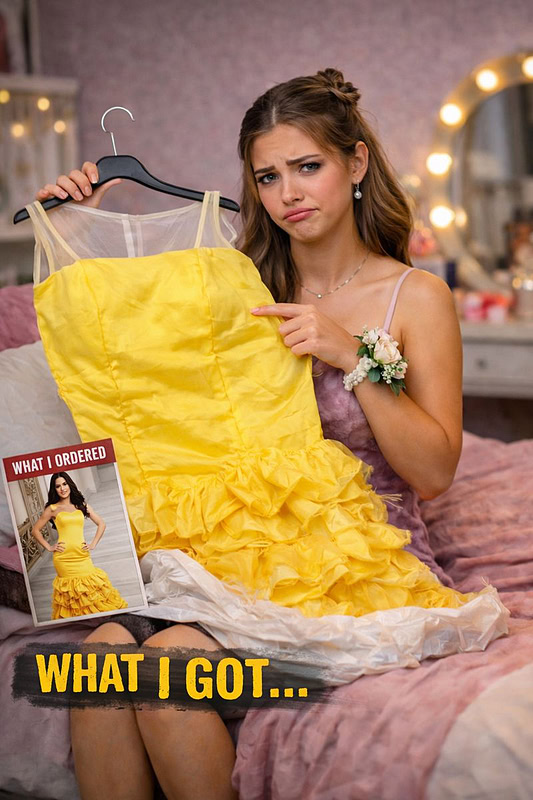
Every prom season, thousands of girls fall for the same trap. They find a gorgeous dress on an unfamiliar website for a fraction of what it costs elsewhere. The photos look identical to designer dresses. The price seems too good to pass up. They order, wait, and then open the package to find a disaster.
This is not an exaggeration. News outlets cover these stories every spring. Girls receive dresses made of sandpaper-like fabric. Colors are completely wrong. Beading falls off or arrives in a plastic bag with a sewing kit – yes, actually expecting the customer to sew on their own beads. Sizing is wildly inconsistent. Seams are crooked. Zippers break immediately.
One girl interviewed by a major news outlet described her experience: she ordered a $99 dress that was supposed to be a beaded gown. What arrived looked like it was sewn by someone who only saw a blurry screenshot of the original. She could not get a refund. With prom days away, she had to buy a second dress at full price. Her $99 savings became a $99 loss plus panic plus the stress of finding something last minute.
This happens because scam websites steal photos from legitimate designers and Instagram influencers. They have no intention of sending you what is pictured. They send cheap imitations made in overseas factories with completely different fabric and construction. By the time you realize what happened, it is too late to get your money back.
The warning signs are consistent: prices that seem impossibly low, custom sizing offered on every dress, shipping times of 10 to 25 days for tailoring, websites with poor English or no physical address, and no phone number for customer service.
Designer prom dress pricing is actually regulated. When a designer releases a dress at $550, authorized retailers sell it at $550. If you find that exact dress for $150 somewhere else, it is not the same dress. You are buying a knockoff, and you will receive a knockoff.
The real cost of cheap is this: you pay $99 for something unwearable, you cannot get a refund, you still need a dress, and now you have less time and more stress. The $99 you thought you saved is gone, and you end up spending more than if you had just bought a quality dress from the beginning.
What Separates a $200 Dress from a $500 Dress
If two dresses look similar in photos, why does one cost twice as much? The difference is in everything you cannot see in a picture.
Construction is the biggest factor. Budget dresses use plastic boning in the bodice – it feels flimsy and loses shape after a few hours of wear. Quality dresses use steel boning that holds its structure all night. Budget dresses have partial linings or none at all, which means the fabric can cling, feel scratchy, or show through in photos. Quality dresses are fully lined with comfortable interior fabrics.
Beading and embellishments tell you a lot. Machine-applied beading is fast and cheap, but the beads sit flat and can fall off easily. Hand-sewn beading takes hours of skilled labor, catches light from every angle, and stays secure through dancing and movement. If a heavily beaded dress costs $150, that beading is not hand-sewn.
Fit across sizes reveals how much care went into design. Some brands scale up their smallest size and call it plus-size, which results in poor proportions and unflattering fit for larger bodies. Quality designers fit each dress on models across the full size range before production. A size 2 and a size 22 should receive the same construction quality, the same attention to detail, the same beadwork. If the larger sizes look like an afterthought, the brand did not invest in proper design.
Fabric quality affects how a dress photographs, how it feels against your skin, and how it moves when you walk. Cheap polyester looks flat and can feel hot. Quality fabrics like proper satin, silk blends, tulle, and jersey drape beautifully, breathe better, and photograph with dimension and depth.
Built-in support makes a significant difference in comfort. Budget dresses often require you to figure out your own undergarment situation, which adds cost and hassle. Quality dresses include built-in cups, bust support, and boning that eliminate the need for complicated undergarments.
None of this means you must spend $500. It means you should understand what you are getting at each price point. Some girls are perfectly happy with a simple, budget-friendly dress for one night. Others want to feel the difference that quality construction provides. Both are valid choices when made with full information.
Where to Save and Where It Matters
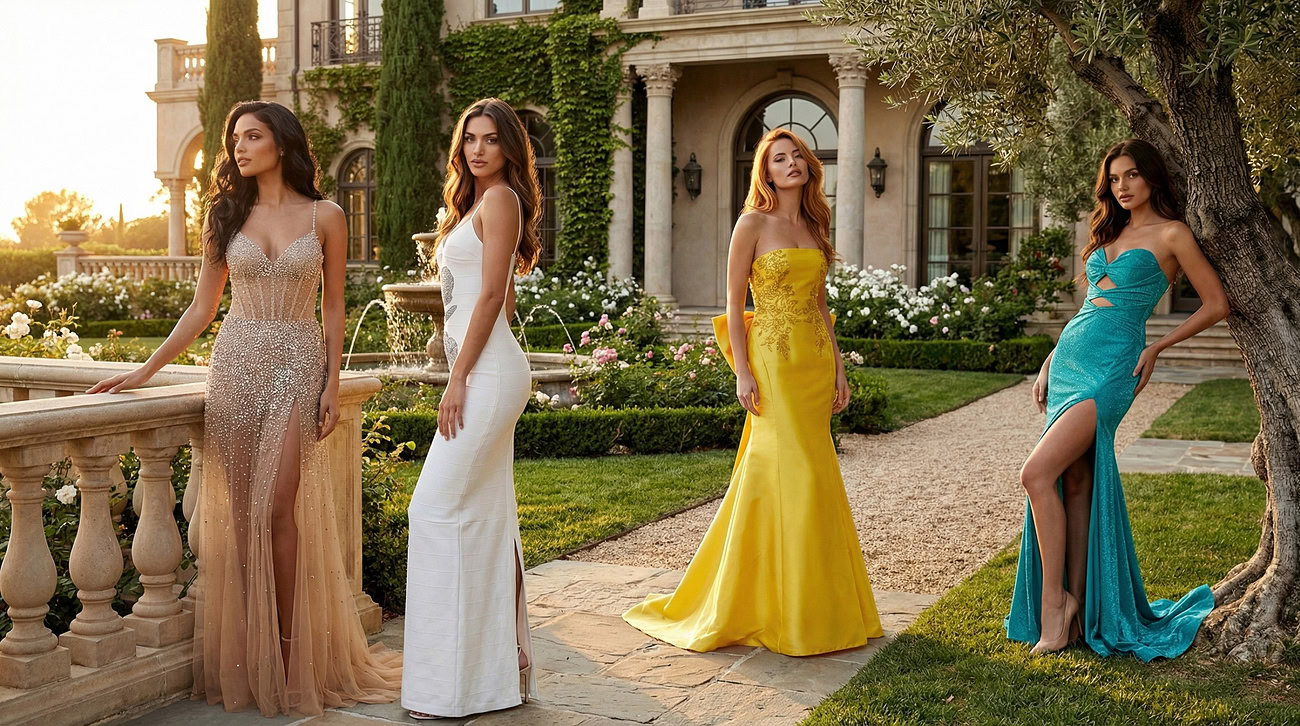
If your budget is tight, here is where you can cut costs without ruining your prom experience.
Accessories are the easiest place to save. Borrow jewelry from family. Choose one statement piece instead of multiple items. Find a clutch at a thrift store – vintage bags are often better quality than new budget options anyway.
Shoes do not need to match perfectly. A nude heel, metallic silver, or classic black works with almost any dress color. Shop department store sales, especially after holidays when formal shoes get marked down.
Hair and makeup can be done at home with practice. Watch tutorials, do trial runs, and enlist a friend who is good with hair. If you want professional results without salon prices, look for beauty school students who offer services at reduced rates.
Here is where spending matters: the dress itself. Specifically, the construction quality. A well-made dress needs minimal alterations, lasts through the entire night without falling apart, photographs beautifully, and feels comfortable for hours of standing, sitting, dancing, and posing.
Trying to save $200 on the dress often costs you $100 in extra alterations, $50 in undergarments the dress should have included, and the intangible cost of not feeling great in photos you will have forever.
This does not mean buying the most expensive dress you can find. It means buying the best-constructed dress within your budget – which often means choosing a simpler style from a quality brand over a heavily embellished dress from a questionable source.
Setting Your Total Budget: Questions to Ask
Instead of asking how much to spend on a dress, ask yourself these questions to figure out your total prom budget.
What is the maximum amount available? This might be savings, earnings from a job, what your parents will contribute, or a combination. Be honest about this number.
What matters most to you? Some girls care deeply about the dress and will skip the limo to afford it. Others want the full experience and will choose a simpler dress to have money for everything else. There is no wrong answer.
Have you accounted for everything? List it out: dress, alterations, shoes, accessories, undergarments if needed, hair, makeup, nails, tickets, transportation, photos, dinner if your group is going somewhere beforehand. Add it up. Is your total realistic?
What is your backup plan? If the dress you love is $100 over budget, can you cut somewhere else? Are there layaway options at local stores? Can you start shopping early to catch sales?
Is this a one-time wear? For most girls, yes. That context matters. You are not investing in something you will wear repeatedly. You are investing in how you feel on one specific night and how you look in photos you will keep forever. That might justify spending more – or it might justify spending less. Only you can decide.
When to Start Shopping: Timing Affects Your Options
Budget and timing are connected. The earlier you start shopping, the more options you have – and the more likely you are to find exactly what you want at a price that works.
January through March is the ideal window for prom dress shopping. Stores have full inventory, sizes are available, and you have time for alterations without rush fees. Girls who wait until April often find that popular styles have sold out in their size, which forces them into compromise choices or last-minute scrambling at higher prices.
Early shopping also gives you time to compare. You can visit multiple stores, try different silhouettes, and make a thoughtful decision instead of a panicked one. This almost always results in better budget decisions because you are not desperate.
If you are working with a tight budget, early shopping is even more important. Some stores offer layaway programs that let you pay over time. Sales happen throughout the season, and you need time to catch them. Alterations can be scheduled during slower periods when seamstresses are not charging rush fees.
Waiting until the last minute is the most expensive way to shop for prom. Rush alterations cost extra. Shipping fees for last-minute orders add up. Your options are limited to whatever is left in stock. And if something goes wrong – wrong size, damaged dress, shipping delay – you have no time to fix it.
Start early. Take your time. Make decisions from a place of confidence instead of panic.
Final Thoughts: What Actually Matters
Prom is one of few occasions in life where you dress for something this memorable. The photos will exist for decades. The memories will stay with you. How you feel walking into that room matters.
But how you feel is not determined by how much you spend. It is determined by whether your dress fits well, flatters your body, matches your personality, and makes you feel confident.
A girl in a $300 dress that fits perfectly will look better in photos than a girl in a $700 dress that needed alterations she could not afford. A girl who understands what she is buying will feel more confident than a girl who overspent and feels guilty about it.
Do your research. Understand the price tiers. Account for hidden costs. Avoid the cheap online trap. Try dresses on in person when possible – photos do not show how fabric feels or how a dress moves. Talk to the salespeople at authorized retailers who can explain construction quality and help you find the best option within your budget.
And remember: nobody at prom knows what you spent. They only see how you look and whether you are having a good time. The best prom dress is the one that makes you feel like yourself – whatever that costs.